
Even on our most productive days, we just can’t sleep at night. The arms ache with fatigue, the back aches with the constant load, and the shoulders ache with responsibility. All of these are inevitable, they say, “One way or another, we all have to deal with it.”
This isn’t about urgent medical conditions, but rather the quiet, constant hum of doubt. It’s the simple things—like questioning a loved one’s intentions or imagining the worst-case scenario in every situation. It’s the unfounded belief that your partner doesn’t respect you, or the worry that your employees are doomscrolling instead of working, even when their output is perfectly satisfactory. These aren’t emergencies, but they are a constant, draining presence.
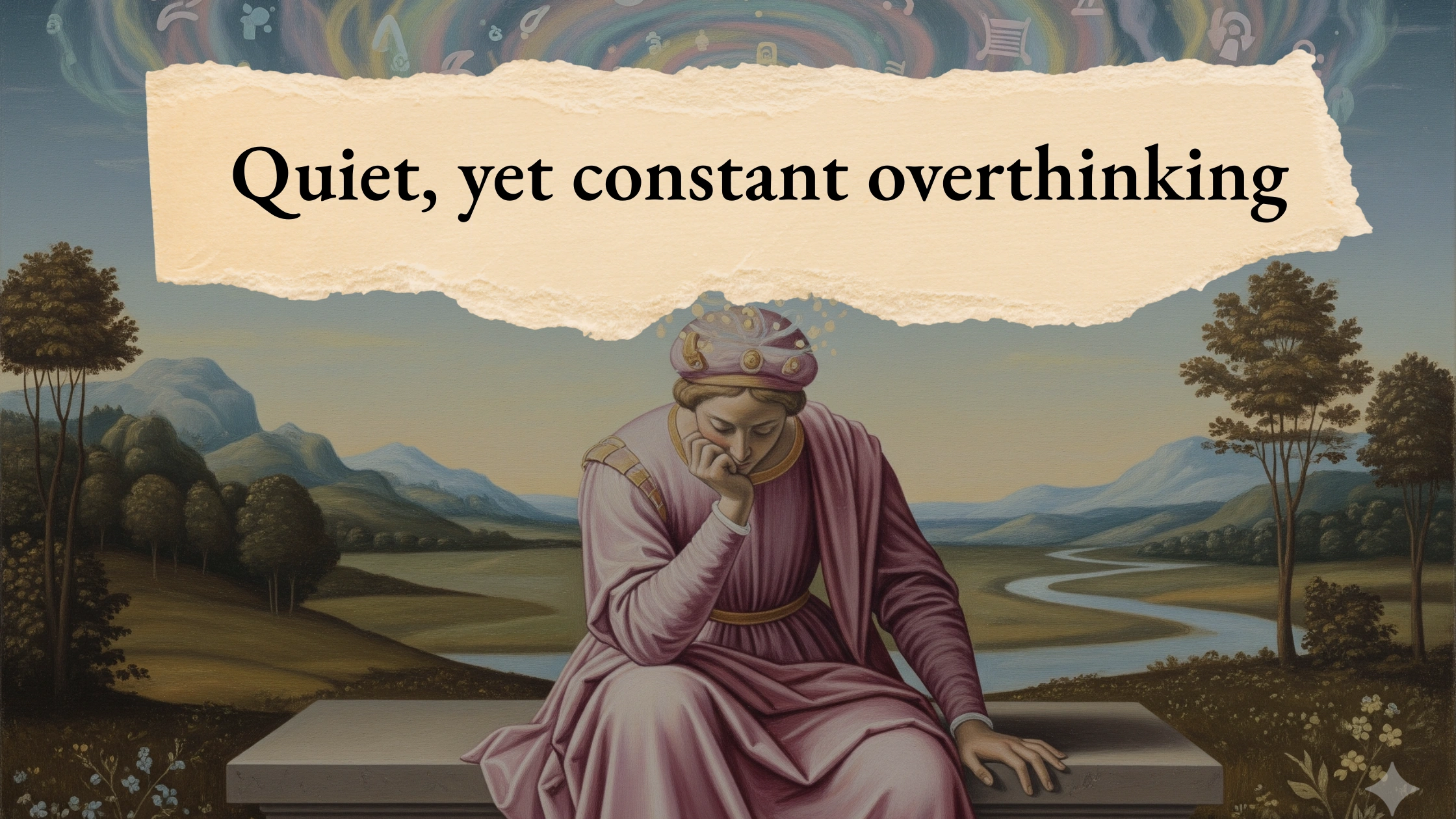
This is quiet, yet constant overthinking.
Where your day goes fine, you do the job well, you are appreciated by society, even looked up to by your younger self, but still feel the heaviness of everything. As if one wrong move and everything will be snatched away. A continuous insecurity in the smallest way.
If you talk to elders, they will often tell you that all of these are modern problems, and there were no such things in their youth. But I believe it’s not true. What lacked a few hundred years ago was not human emotion, but simply the awareness of it.
So first, pat yourself on the back—you dare to acknowledge what’s wrong and what needs to be mended. But again, that’s not done. We have a long way ahead.
The worst part is, it is not a serious enough condition to get it treated, but also not a good condition to live with. Hence, it is necessary to first realize it, accept it, and finally work with it and cherish life.
When you speak up
Let’s say you gather the guts and speak about it with someone.

Most will tell you, “That’s how it is.” “Welcome to the real world—it sucks, and you will love it.” The first two parts are aptly correct, but what about the third, the most important part?
Well, that’s a question for another day when we seek an answer.
Some other people, just to contribute something to the conversation, without even listening to your problem, will say, “Don’t think at all!”
But most will tell you “to accept it and learn to live with it.” Others will tell you how bad their life is, and then ask you to make peace with yours. Well, it can be an approach to think

“Duniya mein kitna gham hai, mera gham kitna kam hai“
How much sorrow exists in the world; how little is mine.
But that is also not a solution to the problem, but rather an escape.
And no matter how far you run, you can’t outrun yourself.
The science behind it
If you meet good people in life, they will tell you to be involved in positive work, do what makes you happy, and get yourself into a hobby. And wonderfully, that actually works.
Research shows that having a hobby is linked to lower levels of depression, and the neuroscience behind this is fascinating. Relaxing hobbies lower stress levels and reduce stress hormones such as cortisol, while increasing the release of brain chemicals such as dopamine and serotonin. Engaging in hobbies regularly can strengthen neural connections, increase focus, and reduce the risk of mental health problems such as anxiety and depression.
When we engage in activities we enjoy, our brains essentially take a vacation from the endless loop of worry. The prefrontal cortex, which is responsible for executive functions and overthinking, gets a break while other neural networks associated with creativity and flow states become active. This neurological shift provides genuine relief from the rumination cycle that keeps us awake at night.
Talking helps more than you think
Talking about it helps, and in ways that go beyond simple venting. Your brain can rewire itself throughout your life; scientists call this neuroplasticity. When you put chaotic thoughts into words, you’re literally organizing the emotional mess in your mind.
There’s something called Cognitive Behavioral Therapy (CBT), which is basically a structured way of examining and changing thought patterns. Think of it like having a skilled mechanic tune up your mind. Studies show it significantly reduces overthinking patterns.
But here’s the beautiful part!
You don’t need a therapist to get some of these benefits. Whether you’re talking to a trusted friend, writing in a private journal, or even sharing anonymously online, you’re doing something powerful.
You’re taking the jumbled worries in your head and organizing them into sentences.
Think of overthinking thoughts like clothes scattered all over your room. Just picking them up and putting them in order makes the whole space feel less chaotic.
When someone listens without judgment, your body literally shifts from panic mode into a calmer state. Even writing in your diary works because you’re organizing those scattered thoughts into something manageable. This won’t show any instant result, and people often leave this practice, and it seems unyielding, but remember
The only way to calm an ocean is be to be patient and let nature do it’s course.
Practical steps that will help
1. The Future Past Reality Check
Every time you find yourself overthinking, ask yourself: Am I thinking of a future that is out of my control? Or am I dwelling on the past, on which I can’t change anything?
If you can change it, then just make it follow with action. And if you can’t change it, then you actually need not worry about it.
The above lines may seem simple, but place them in every situation, and you are likely to get out of the gravest place.
2. The Facts vs. Opinions Exercise
Another such instance happens when we have an interaction with someone, and some series of events takes place that was not as we expected. At that time, take a pen and paper, make two columns: facts and opinions.

Whatever you are thinking, are they facts, or are they opinions? Once done with this, and you still feel the same restless feeling, it’s better to communicate with the other person, because your opinions might be totally different from their intentions.
This thing will help you solve so many problems with your loved ones and make your internal life much more peaceful.
3. The Deliberate Joy Approach
So far, you might think, overthinking is a major issue you need to mend at first instance, but take a breath.
Everytime you don’t need to solve the problem then and there.
Sometimes life will not give you the time, and sometimes you will not have the energy to solve it.
In those moments, find what makes you happy, and do it DELIBERATELY.
“Sometimes, it’s not easy to bring light into the darkness; in such times, you only need what’s necessary to survive the night.”
Other better things you already know: how breathwork, healing, and journaling can help. Don’t consider these as clichés, but actually try and do it. It helps and always shows results. To know these in depth, check out: How to stop overthinking
The Middle Path
The truth is, we live in the space between “everything is fine” and “everything is broken.” Overthinking isn’t a character flaw, it’s often a sign of a mind that cares deeply and wants to do well. The goal isn’t to stop thinking altogether, but to think more skillfully.
Some nights, you’ll still lie awake. Some days, the weight will still feel heavy. But with practice, these moments become visits rather than permanent residents in your mind.
Remember: the very fact that you recognize your overthinking is the first step toward freedom from it. You’re not broken. You’re human, trying to navigate a complex world with a brain that’s doing its best to protect you.
And in this recognition, in this gentle acknowledgment of our shared struggle, perhaps we find the third part that everyone forgets to mention: We are going to love it!
And lastly,
You are precious,
Please take care of yourself,
Consider it as a gentle request.
Word from our book ‘The North Star.’ An immersive experience of poerty and illustration.
Get your copy from: Amazon
Check out more words: Blogs